Local Weather & News - Radar
- 3.7
- Rating
- 500.00K
- Installs
- Free
- Price
 Analysis by App-foxy
I spent time with Local Weather & News - Radar as a compact way to check local conditions while also keeping an eye on broader headlines. It sits in the News & Magazines category, but its store description points to a more practical daily role: weather is the reason I would open it first, while the news and alert elements make it more useful when I want a quick regional update without moving between several apps.
That combination is appealing because weather and news often belong to the same decision. Before leaving home, I may want to know whether rain is approaching, whether a warning affects my route, and whether a developing local story changes my plans. The app is free to download and suitable for Everyone, although it includes optional in-app purchases ranging from four dollars and ninety-nine cents to nineteen dollars and ninety-nine cents per item. That makes it worth testing before deciding whether the paid extras fit your routine.
Daowei Network is the developer behind the app. It has reached more than five hundred thousand installs and holds a 4.1 average from roughly seven hundred ratings, with close to two hundred written reviews. Those figures suggest a real user base, but they also tell me to keep expectations sensible: this is a focused utility rather than a universally essential replacement for every weather, alert, and news service.
You May Also Like

 Blood Strike: 2.5 Anniversary
Blood Strike’s Loadouts Turn Every Drop Into a Tactical Gamble
A close look at Blood Strike’s custom loadouts: how fast access to signature weapons reshapes its battle royale rhythm, rewards preparation, and narrows the gap between fights.

 Pandora - Music & Podcasts
Pandora’s Music Is Easy to Start, but Harder to Recover
Pandora’s strength is its low-effort path from a seed to a station. Its weak spot is how much confidence it asks you to place in connection, setup, and quiet recovery.

 8 Ball Pool
 Is Built on Rivalries, Rematches, and Routine
A close look at the rivalries, rematches, shared routines, and unanswered safety questions that turn a quick pool match into a persistent mobile community.

 Samsung Music
’s Quiet Strength Is Playing What You Already Own
Its reach comes less from spectacle than from dependable access to a personal library. That simplicity is both the app’s strongest retention engine and its ceiling.

 AccuWeather: Weather Radar
AccuWeather Review: A Quick, Clear Forecast for Everyday Decisions
For everyday plans, the best forecast is the one you can understand quickly. AccuWeather makes rain timing, radar, and local conditions easy to act on, with a few trade-offs.

 Hill Climb Racing
Why Hill Climb Racing Still Turns Crashes Into One More Run
A tiny car, a bumpy hill and one more upgrade: Hill Climb Racing keeps resurfacing because its simple chaos makes every near-miss feel personal.
More From Our News Desk



How I use the app in an ordinary day
I use this section to show how a brief, repeatable check can fit around real plans rather than turning into constant refreshing. I also explain how I decide when a weather change or headline deserves a second look, so the app stays a practical aid instead of another source of distraction.
A simple baseline workflow works best
My most reliable routine starts with one deliberate check rather than repeatedly opening the app throughout the day. I look at the current local forecast, inspect the upcoming conditions, and then move to the news or alert area only if something appears relevant. This keeps the app from becoming a stream of disconnected information. The useful question is not “what is everything happening right now?” but “what could affect my next few hours?”
For a commute, that means checking before I leave instead of relying only on the current temperature. A dry-looking morning can still become inconvenient if rain is expected later, and a weather alert matters more when it overlaps with the time I will be outdoors. I found that treating the radar and alert information as planning tools, rather than as background entertainment, makes the app feel much more purposeful.
The news side is most useful when I want a quick scan. I would not approach it like a long-form reading app. Its strength is the short session: open it, see whether there is a meaningful local or world development, and close it once I understand what may affect me. That is a better fit for people who want awareness without committing to a long reading list.
Why the combined format can be convenient
Using one app for weather and headlines reduces the small friction of switching between separate services. That matters on busy mornings, especially when I am checking information with one hand while preparing to leave. The practical advantage is not that every individual feature is necessarily deeper than a dedicated alternative; it is that the app brings several relevant checks into one short visit.
I also like the possibility of using weather as the starting point for a broader decision. If conditions look normal, I can move on quickly. If an alert or unusual forecast appears, I can then read the related news context. This order prevents the news feed from distracting me before I have answered the immediate question of whether travel, errands, or outdoor plans need adjustment.
There is a trade-off, though. People who want a highly specialized weather tool may find the broader presentation less focused than a dedicated meteorological app. Likewise, readers who mainly want deep journalism may prefer a news service with stronger article discovery and reading tools. This app makes the most sense in the middle: quick local weather, timely alerts, and a lightweight news check.
One realistic scenario where it earns its place
Imagine I am leaving for work, taking public transport, and expecting to walk part of the route. I open the app before putting on my shoes. The current conditions tell me what is happening now, the forecast helps with the return trip, and the alert area gives me a reason to pause if severe weather is developing. I can then skim the news section for a local disruption or major event that might affect the journey.
That workflow is more useful than checking only a temperature number. It combines timing, location, and context. I would still verify serious warnings through an official local authority when the situation is dangerous, but for everyday planning the app can serve as a convenient first screen.
Settings worth checking before relying on it
Experienced use begins with making the app reflect the places and information I actually care about. I would review the location setup first and make sure the displayed area is the one I intend to monitor. A weather app can feel inaccurate when it is simply showing the wrong locality, so this basic check is more valuable than immediately changing every available option.
I would also inspect alert controls carefully. Alerts are useful only when they are timely and relevant. If the app offers choices about which types of notifications to receive, I would keep only those that could change my plans and avoid turning every update into an interruption. A quiet notification setup is easier to trust than one that produces so many messages that I start ignoring all of them.
News preferences deserve the same attention. I would favor local information when I am using the app for daily planning, then use the broader news material for occasional context. If the feed becomes too general, the app loses some of its practical identity. The strongest habit is to make the first screen answer a personal question: what do I need to know before I go out?
Because the app is free but includes optional purchases, I would review any upgrade screen before confirming a purchase. The listed purchase range runs from four dollars and ninety-nine cents to nineteen dollars and ninety-nine cents per item, so the difference between trying the basic experience and paying for an extra is significant enough to consider carefully. I would not pay simply because an alert or feature looks prominent; I would first use the free version across several normal days and identify a specific problem the purchase would solve.
Small habits that make checks faster
The fastest pattern is to check at predictable moments: before leaving home, before a planned outdoor activity, and before the return journey. That is more efficient than refreshing constantly. Weather changes, but repeatedly checking without a decision in mind usually creates noise rather than better preparation.
I also recommend separating “current conditions” from “planning conditions.” The first tells me whether I need an immediate change, such as a coat or umbrella. The second tells me whether I should alter the timing of a trip or carry something for later. Keeping those questions separate makes the forecast easier to act on and reduces the temptation to overreact to a single current reading.
For news, I use a short scan rather than opening every headline. I look for items connected to my location, travel, public safety, or events that could affect the day. If a story is important, I continue reading; if it is merely interesting, I save the thought for later and return to the weather task. This keeps the app useful as a daily tool instead of turning it into another endless feed.
A further advantage is consistency. When I use the same order every time—location, current conditions, upcoming forecast, alerts, then news—I spend less time deciding where to look. That repeatable sequence is especially helpful when I am in a hurry. It also makes it easier to notice when something looks unusual, because I am comparing the information with the same mental checklist each day.
Where the app is less convincing
The combined design is also its main limitation. Weather, alerts, and news serve different purposes, and no single interface can be the best specialist tool for all of them. If I need detailed meteorological analysis, highly technical radar interpretation, or a source I use for emergency decisions, I would choose a dedicated service or official authority instead.
The same applies to serious news reading. A quick headline view is convenient, but it may not replace a publication or newsreader that I already trust for detailed reporting, saved articles, topic organization, and long-form context. I see this app as a first pass, not as my only source for consequential information.
There is also a potential attention problem. Combining news with weather can encourage me to keep browsing after I have already answered the practical question that brought me in. My solution is simple: check the weather first, treat alerts as action items, and only then browse headlines if I have time. Without that boundary, the app can become less efficient than the separate tools it is meant to simplify.
What I would verify before making it a primary tool
Before depending on it every day, I would test how well the displayed location matches where I actually spend time. Someone who travels between neighborhoods, works across a city, or frequently visits another region should pay attention to whether switching locations is convenient enough for that routine. A single home location may be fine for many users but restrictive for people whose day is spread across several places.
I would also observe the behavior of alerts over a normal week. The important question is not simply whether alerts exist, but whether they arrive at a useful moment and remain relevant to my area. If notifications are too broad, too frequent, or not aligned with my plans, I would reduce them rather than allowing them to undermine trust in the app.
Finally, I would compare the free experience with the paid options only after using the core workflow. Since the app is free to start, there is little reason to purchase immediately. A careful trial reveals whether the basic weather and news combination already solves the problem, and it prevents paying for convenience that I may not use.
Who should install it, and who should skip it?
I think it is a good match for people who want a quick local weather check with alerts and a modest news layer in the same place. It suits commuters, students, families planning outdoor activities, and anyone who prefers a short morning briefing over several separate apps. It is especially practical when the main goal is awareness rather than deep analysis.
I would be more cautious if I were choosing an app for emergency preparedness, professional forecasting, or detailed news research. In those situations, I would pair this app with official warning channels, a specialist weather service, or a trusted publication. The presence of real-time alerts does not remove the need to confirm serious information through authoritative sources.
Users who dislike mixed-purpose apps may also prefer separate tools. Some people want weather to be extremely focused and news to be completely independent. For them, the convenience of one app may not compensate for the compromises of a combined experience.
My verdict after building a repeatable routine
The current version, 1.1.05, presents Local Weather & News - Radar as a practical everyday companion rather than a specialist replacement. I found its value increases when I use a consistent sequence, keep notifications selective, and treat the news area as context after checking the forecast. Those habits make the app feel faster and less distracting than simply opening it without a plan.
Its 4.1 average and growing install base make it a reasonable app to try, but they should not be mistaken for proof that it will suit every location or routine. My recommendation is to start with the free experience, set the location carefully, test alerts during ordinary days, and decide later whether any optional purchase offers a benefit I can clearly describe.
The best reason to choose this app is convenience with a purpose: it brings local weather, broader headlines, and timely alerts into one quick check. I would recommend it to a friend who wants a simple daily briefing and does not need advanced specialist tools. I would not recommend using it as the sole source for severe-weather decisions or in-depth journalism. Used within those limits, it is a useful, approachable addition to an Android device running version 7.0 or later.
FAQs for Local Weather & News - Radar
01What features does Local Weather & News - Radar offer?
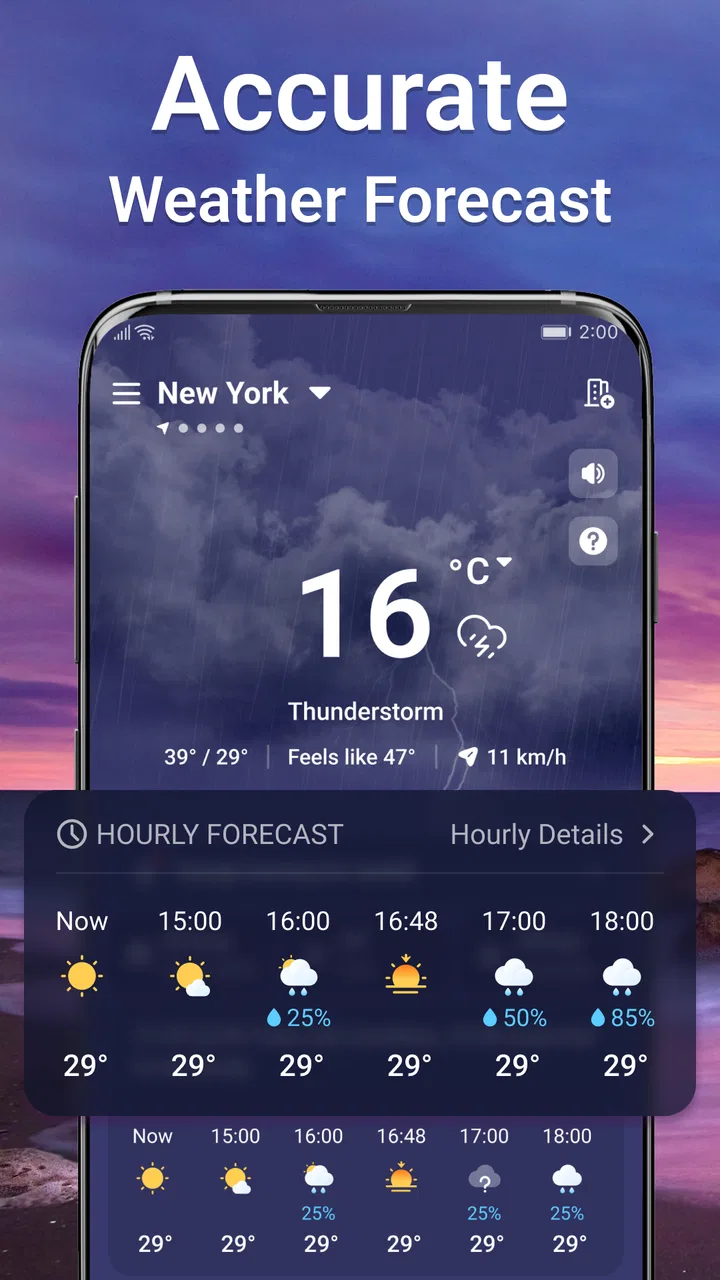
Local Weather & News - Radar provides real-time weather updates, detailed forecasts, radar images, and severe weather alerts. It also includes local and national news updates tailored to your location. Users can customize notifications to receive updates on significant weather changes and breaking news, ensuring they stay informed at all times.
02Is Local Weather & News - Radar free to use?
The app offers a free version with essential features, including weather forecasts and basic news updates. However, there is also a premium subscription available that provides ad-free usage, advanced radar features, and additional customization options. This model allows users to choose the level of service that best suits their needs.
03How accurate is the weather forecasting in the app?
Local Weather & News - Radar uses advanced meteorological data from reputable sources to provide highly accurate forecasts. The app updates frequently to reflect real-time weather changes and uses radar technology to offer precise short-term predictions. Users can rely on its forecasts for planning their daily activities.
04Can I customize the news topics I receive?
Yes, the app allows users to personalize their news feed by selecting specific topics or categories they are interested in. This customization ensures that users receive news updates that are relevant and important to them, enhancing their overall experience and keeping them informed about the topics they care about most.
05Does the app provide severe weather alerts?
Local Weather & News - Radar sends timely alerts for severe weather conditions, helping users prepare and stay safe. These alerts include information on storms, hurricanes, and other extreme weather events. The app’s notification system is designed to ensure users receive critical updates as soon as they are available.
Pros
- Accurate real-time weather updates.
- Customizable weather alerts.
- User-friendly interface design.
- Detailed radar and satellite imagery.
- Localized news integration.
Cons
- Frequent ads can be distracting.
- Premium features locked behind paywall.
- Occasional app crashes reported.
- Battery consumption is noticeable.
- Limited international coverage.

Local Weather & News - Radar
Gallery